
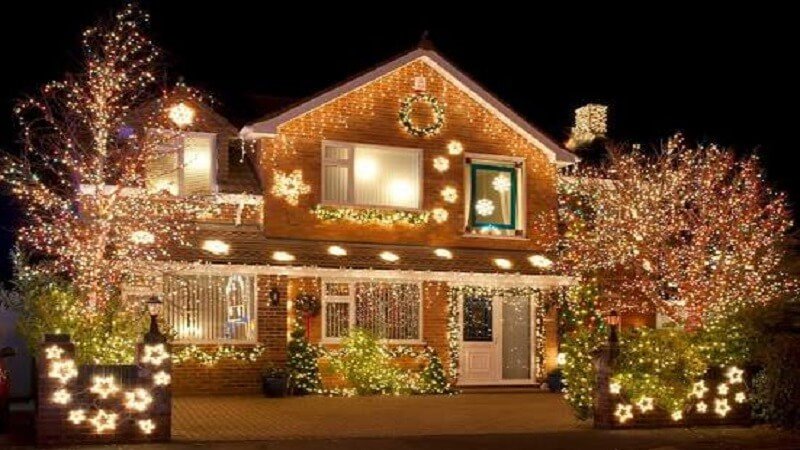
Decorating the outside of your home for the holidays takes more than picking a design you like. Weather exposure, electrical connections, cord placement, mounting methods, and working at height all play a role in how safely a display holds up over weeks of use. Before you start browsing outdoor Christmas lights, it’s worth understanding how they’ll be powered, mounted, and protected from the elements — these details matter far more for long-term safety than how the final display looks. This article walks through the practical steps that help cut down on electrical, fire, property-damage, and fall risks, so you can still put together a display you’re proud of.
Start With a Simple Decorating Plan
Before you buy anything, sketch out the areas you want to decorate — rooflines, railings, trees, pathways, entry points. Figure out where your nearest outlets are and whether they’re outdoor-rated and GFCI-protected. Measuring approximate distances ahead of time saves you from stringing together too many cords or improvising connections once you’re already mid-installation.
Picture a homeowner planning a porch display who maps out outlet locations and cord paths on paper beforehand. That one extra step heads off the usual last-minute scramble — daisy-chaining extension cords or running a cord through a window just to reach power.
It also helps to set realistic limits. A smaller, well-planned display is a lot easier to keep up with than one stretched across every surface of your house. Decide early whether you’re going for accent lighting, pathway visibility, or outlining architectural features, and make sure electrical panels, vents, gutters, doors, and emergency routes stay clear.
Choose Equipment Rated for Its Intended Use
Anything used outdoors needs to be labeled specifically for outdoor use. The U.S. Consumer Product Safety Commission recommends choosing lighting tested by a recognized independent laboratory and checking labels for voltage, wattage, and connected-strand limits.[5] Indoor-rated products shouldn’t go outside under any circumstances, even on a covered porch.
Before you install anything, inspect it for cracked sockets, frayed wires, loose connections, or corrosion. Swap out damaged sets rather than patching them with tape, and check everything again after long storage or rough weather. Manufacturer instructions and product labels should always take priority when they’re more specific or stricter than general guidance like this.
Understand Electrical Loads and Cord Safety
Don’t overload outlets and circuits. Stick to the manufacturer’s maximum connected-strand limit — the CPSC recommends no more than three standard-size light sets per single extension cord.[5] Warm plugs, tripped breakers, flickering, buzzing, or a burning smell are all signs something’s overloaded.
Use extension cords made specifically for outdoor use, and match their amperage capacity to whatever you’re plugging in, as recommended by the Electrical Safety Foundation International.[1] Avoid linking multiple extension cords together unless the manufacturer explicitly says it’s fine, and keep connections elevated and away from standing water — without sealing them up in a way that traps moisture inside. Cords should never run through closing windows, under doors, or beneath rugs.
A ground-fault circuit interrupter (GFCI) cuts power the moment it detects certain types of electrical leakage, and plugging outdoor lighting into GFCI-protected circuits is widely recommended.[1][7] If a GFCI keeps tripping, disconnect the decorations and figure out why rather than just resetting it again. A GFCI adds a real layer of shock protection, but it’s not a substitute for outdoor-rated equipment and sound wiring.
Install Decorations Without Creating Physical Hazards
Fasten decorations to firm supports using insulated clips or hooks made for the surface, rather than nails or staples that can pierce insulation. If staples are unavoidable, the CPSC specifically recommends insulated ones.[14] Avoid pinching, stretching, or sharply bending cables, and keep fixtures well away from heat sources or anything flammable.
Factor in rain, snow, wind, and falling branches by keeping connections out of spots where water tends to collect. Secure loose sections without pulling cords taut, and give the whole display a once-over after any severe weather.
For walkways, route cords along the edges instead of straight across foot traffic, and use protective covers wherever crossing is unavoidable. A display originally set up with cords crossing a front walkway can usually be rearranged along the perimeter instead — same look, less risk of someone tripping.
Work at Height Carefully
Stay off roofs and other unstable surfaces. Use a ladder set on firm, level ground, keep three points of contact at all times, and have someone steady the ladder if you can. Keep tools and decorations secured, and skip the job entirely if it’s raining, icy, or windy. For steep rooflines or complicated wiring, hiring a qualified professional is a perfectly reasonable call — none of this replaces local building codes or a professional assessment when one’s needed.
Reduce Energy Use Without Sacrificing Safety
LED strands generally use a lot less energy and run much cooler than incandescent equivalents. The U.S. Department of Energy reports that LEDs can use roughly 70% less energy than conventional holiday lights.[3] Lower wattage does ease the electrical load, but manufacturer connection limits still apply — being efficient doesn’t mean you can connect unlimited strands.
A timer rated for outdoor use and sized to the connected load is a handy addition, switching the display off during the hours everyone’s asleep. But think of it as a convenience, not a replacement for regular equipment checks.
Safe Daily Operation and Removal
Before switching on a display, check for damaged wires, standing water, or mounts that have come loose, and keep cords clear of doors, windows, and vehicles. Turning decorations off before bed or before leaving home lines up with ESFI guidance.[1][9]
When it’s time to take decorations down, cut the power first, unplug by the body of the plug rather than yanking the cord, and let everything dry out before you pack it away. Coil strands loosely, label them by location, and store them somewhere away from heat, pests, and anything that could crush them. If something’s damaged, toss it rather than tucking it back into storage for next year.
Quick Safety Checklist
- Outdoor-rated products are used outside
- Lighting has been inspected for damage
- Safety markings and instructions have been reviewed
- Extension cords match equipment and are outdoor-rated
- Outdoor outlets provide GFCI protection
- Connections stay away from standing water
- Cords don’t cross walkways or become pinched
- Displays are securely mounted
- A timer or routine switches decorations off
- Damaged equipment is removed from service
A Safer Display Starts With Better Planning
A safe, attractive display really comes down to a simple sequence: plan the layout, verify equipment ratings, work out the electrical needs, mount everything securely, inspect it regularly, and take it down with care. A smaller, well-maintained setup will always beat an overloaded one. And when installation means roof access, damaged wiring, or a breaker that keeps tripping, pausing to call in a professional is the right move. A little thoughtful preparation goes a long way — not just for how the display looks, but for the safety of everyone around it.