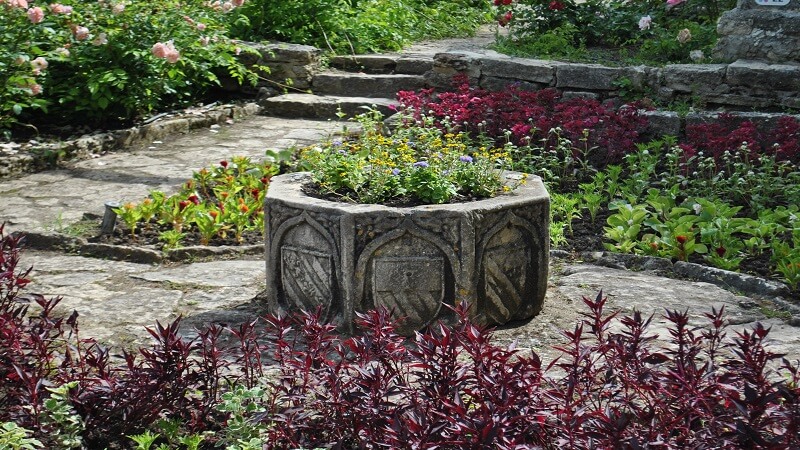
Have you ever made something nice in your garden and then seen it collapse years later?
You’re not alone.
The main reason garden ornaments don’t survive is because people buy ornaments made from the wrong materials. They choose the ones that look good in the shop window rather than how well they will withstand rain, sun damage or insects. Here’s another thing though…
Choosing the correct material can mean the difference between a 5 year garden feature and a 50 year garden feature.
In this guide you’ll see how to construct garden features that will last.
Let’s jump in.
Inside this guide:
- Why Garden Features Fail So Fast
- The Best Materials For Weather-Proof Garden Features
- Garden Features That Need The Toughest Wood
- Simple Design Tricks That Extend Lifespan
- Maintenance Habits That Actually Work
Why Garden Features Fail So Fast
Most garden features don’t fail because of bad design.
They fail because of moisture, sun, and bugs.
Problem: Untreated wood that’s left outside takes a beating. Rain penetrates it. Ultraviolet light degrades it. Bugs bore holes in it. Mildews devour the fibers. Cumulatively, that damage can add up quickly.
Landscape research shows pressure-treated wood lasts 10 to 20 years, depending on chemicals used and exposure.
That sounds like a long time…
However most homeowners desire features that have longer lifespans than that. And nobody likes having to rebuild their retaining wall every 10 years.
The solution?
Choose materials that can take a beating. Dense, oily hardwoods which resist moisture and pests. Particle board may be inexpensive but you will pay for it in maintenance and replacements.
The Best Materials For Weather-Proof Garden Features
Not all wood is created equal.
If you are building garden structures that you want to stand the test of time, you need hardwood with Class 1 durability rating. According to the timber trade, Class 1 timbers last 25 years or more in external environments.
That’s where Red ironwood comes in.
Red ironwood (also known as ekki or azobe) is one of the densest, heaviest hardwoods in existence. Marine construction, bridges, and other heavy duty outdoor structures use it because of its incredible ability to withstand prolonged exposure to water, heavy loads, and decades of abuse without deteriorating.
Here’s what makes Red ironwood so tough:
- Extreme density that resists rot and insects
- Natural oils that repel water
- Very high Janka hardness rating
- Class 1 durability rating
- Life expectancy of 25+ years outdoors
Red ironwood isn’t even in the same ballpark as softwoods such as pine or cedar.
Cedar might last 15 to 20 years. Red ironwood keeps going long after that.
But it’s not the only option…
Other great hardwood choices include:
- Ipe (Brazilian walnut)
- Teak
- Cumaru
- Iroko
Each of these hardwoods will give you comparable levels of durability, but at different costs and aesthetics. Iroko is the most affordable of these woods if you’re trying to save some money. If money is no object then Red ironwood is the king of garden-hardwoods.
Garden Features That Need The Toughest Wood
Some garden features get more abuse than others.
If you want something constructed that contacts soil or retains moisture you should use the highest quality material possible. Soil contact and moisture are the two most damaging elements for outdoor wood.
These are the garden features that need heavy-duty materials:
- Retaining walls
- Raised garden beds
- Pond edges and water features
- Boardwalks and stepping paths
- Fence posts
- Pergola posts
- Bridges over ponds or drainage ditches
For any of these, Red ironwood is a smart pick.
It won’t decompose sitting in muddy ground. It won’t split during temperature changes. It won’t twist when soaked and then dried out.
Other features, like decorative fences or arbors, can get away with softer woods.
Keep in mind: Dirt and water exposure mean harder materials.
Simple Design Tricks That Extend Lifespan
Choosing the right material is half the battle.
Half of the battle is planning your landscape elements to be durable. No matter how good your hardwood is it won’t last if installed improperly.
Follow these design rules for maximum lifespan:
- Elevate wood off the ground where possible
- Use gravel bases for drainage
- Angle surfaces so water runs off
- Add flashing or caps to horizontal surfaces
- Leave small gaps between boards for airflow
- Use stainless steel or galvanised fasteners
Poor drainage is the number one killer of outdoor wood.
If your garden feature collects water around it it will rot from the bottom up… no matter how nice the material.
Don’t forget to seal end grain. Wood will absorb moisture from end grain like a sponge. Spray a coat of sealant on the cut ends. You could add years to the life of your feature.
Maintenance Habits That Actually Work
Even the toughest wood needs some care.
With just a little care and maintenance, your garden ornaments will last longer than anything else in your yard.
Here are the habits to build:
- Inspect features once a year for damage
- Clean off debris and dirt buildup
- Reseal or oil the wood every 2 to 3 years
- Check fasteners and tighten loose ones
- Trim back plants that grow against wood surfaces
Sunlight is another sneaky killer.
UV rays degrade wood fibres. This causes them to turn grey and eventually crack. Apply a UV-resistant sealer/oil and your wood will stay looking new and structurally intact for years.
And here’s a bonus tip…
Adjust sprinklers so they don’t hit your landscaping. Constant exposure to sprinklers is one of the quickest ways to ruin outdoor wood, even pressure treated.
Bringing It All Together
Building garden features that last for decades isn’t complicated.
It comes down to three things:
- Pick the right material
- Design for water runoff
- Do basic maintenance
Do those three things right and your garden features will outlive your neighbours’ twice removed.
Products made with Red ironwood, ipe, teak and other Class 1 hardwoods are the absolute best option for outdoor applications. They will cost more initially…
However they save you thousands in the long run as you aren’t always buying new ones.
So next time you plan a garden project, think long-term:
- Invest in materials that can handle years of wear and weather
- Design your features so water drains away
- Do a bit of maintenance each year
Your garden will thank you.