
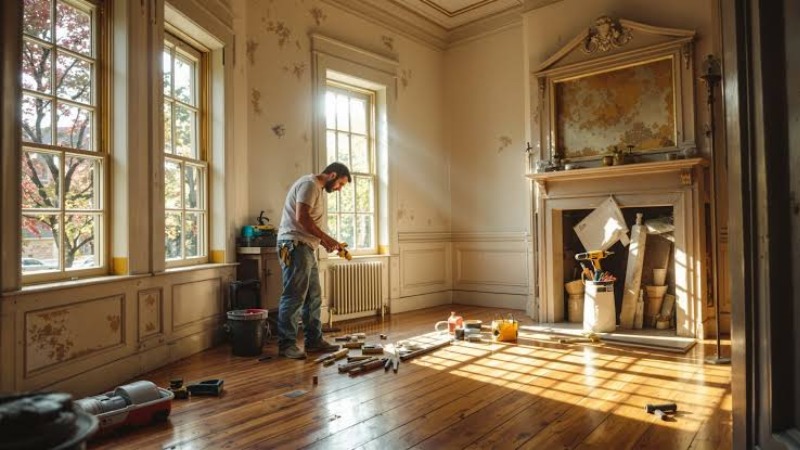
Older homes have a character that newer properties often struggle to replicate. Original woodwork, established landscaping, unusual layouts, solid construction, and architectural details can make them deeply appealing. What they sometimes lack, however, is the convenience that people now associate with modern living.
That does not mean the only solution is a major renovation.
A home can become noticeably safer, more efficient, cleaner, and easier to manage through a series of smaller upgrades. Many of them require little or no structural work. Instead of tearing out walls or replacing entire systems, homeowners can focus on practical improvements that solve everyday problems while adding a layer of modern technology.
The smartest approach is often to identify the areas where an older property creates the most maintenance, uncertainty, or wasted energy and address those first.
Start With Problems You Cannot Easily See
Some of the most useful smart-home devices are not particularly exciting to look at. They simply monitor parts of the property that homeowners cannot constantly watch themselves.
Water leaks are a good example.
A slow leak beneath a sink, behind an appliance, near a water heater, or in a basement may continue unnoticed for days. In an older house, plumbing connections and aging fixtures can make these problems more likely. Small wireless leak sensors can be placed in vulnerable areas and send an alert when they detect moisture.
More advanced systems can monitor water flow throughout the property and flag unusual consumption patterns.
This kind of technology is valuable because it does not change how the home looks. It simply provides earlier warning when something goes wrong.
Temperature and humidity sensors work in much the same way. They can be especially useful in basements, crawl spaces, attics, garages, and rarely used rooms where environmental conditions may differ considerably from the main living areas.
Upgrade the Thermostat Before the Heating System
Older properties can be difficult to heat evenly. Some rooms may feel warm while others remain chilly, especially when insulation, ductwork, radiators, windows, and room layouts have been modified over decades.
Replacing an entire heating or cooling system can be expensive. A smart thermostat is a much smaller starting point.
Depending on the system already installed, a compatible thermostat can create schedules, adjust temperatures based on household routines, and provide information about energy use. Remote control can also be useful when homeowners are traveling or when a second property is left vacant for part of the year.
However, technology cannot completely compensate for physical inefficiencies.
If a room loses heat because of drafts around doors, poorly sealed windows, or gaps around utility penetrations, addressing those weaknesses may deliver more noticeable comfort than constantly adjusting thermostat settings.
Making an older home smarter therefore means combining technology with basic maintenance rather than assuming every problem requires another device.
Improve Sealing in Small, Strategic Areas
Air sealing is one of those improvements that rarely receives much attention until homeowners notice how much difference it makes.
Older buildings naturally develop gaps as materials expand, contract, settle, and deteriorate. Drafts can appear around doors, windows, attic access panels, plumbing lines, vents, baseboards, and other openings.
Weatherstripping and appropriate sealants can reduce unwanted airflow without changing the character of the property.
The goal does not necessarily need to be making the house completely airtight. Instead, homeowners can focus on obvious problem areas.
A useful way to think about smart upgrades is that sensors help identify problems, while straightforward repairs often solve them. If a humidity monitor repeatedly shows elevated moisture in one part of the house, for example, the next step should be investigating ventilation, leaks, drainage, or sealing rather than simply watching the numbers.
Use Smart Lighting Where It Actually Helps
Replacing every switch and bulb in an older house with connected technology is rarely necessary.
Smart lighting works best when it solves a particular inconvenience.
Exterior lights can be scheduled to turn on automatically after sunset. Hallway or basement lighting can use motion sensors. A porch light can be controlled remotely when homeowners are away. Certain lamps can be scheduled to make an empty property appear occupied.
LED bulbs themselves also represent a simple upgrade even without smart controls. They generally last considerably longer than traditional incandescent bulbs while using less electricity.
Older homes often contain a mixture of fixtures installed during different decades, so compatibility should always be checked before changing switches, dimmers, or bulbs.
The result should make lighting simpler, not introduce another system that residents constantly need to troubleshoot.
Add Security Without Rewiring the House
Home security technology has become particularly accessible for older properties because many products no longer require extensive wiring.
Wireless doorbell cameras, outdoor cameras, motion sensors, and contact sensors can often be installed with relatively little disruption.
Where cameras are used matters more than simply having many of them.
Entry doors, driveways, detached garages, side gates, and less visible parts of the property usually provide more useful coverage than placing devices everywhere. Motion notifications and remote viewing can also help homeowners understand what is happening around the property while they are away.
Traditional security improvements still matter as well.
Good locks, functioning windows, sturdy exterior doors, clear outdoor lighting, and visible house numbers can improve everyday safety without relying on connectivity.
Technology works best as another layer rather than the entire security strategy.
Make Storage Work With the House You Have
Not every improvement in a smarter home needs an app.
Older properties frequently have storage spaces designed for lifestyles that were very different from today’s. Closets may be small, kitchens may have limited cabinetry, and utility rooms may not accommodate modern equipment particularly well.
Simple organizational changes can make these spaces work harder.
Adjustable shelving, drawer organizers, wall-mounted storage, closet systems, under-stair solutions, and clearly labeled utility zones can reduce clutter without changing the home’s structure.
Good storage can also make maintenance easier. When mechanical equipment, pipes, electrical panels, and access points remain visible instead of being buried behind boxes, homeowners are more likely to notice moisture, damage, or unusual conditions early.
Sometimes making a house feel more modern is less about adding technology and more about making the existing space easier to understand and manage.
Pay Attention to Humidity and Ventilation
Moisture is one of the recurring challenges in many older properties.
Basements can feel damp. Bathrooms may have limited ventilation. Attics may trap heat and moisture. Older windows can develop condensation during certain seasons.
A small digital humidity monitor can provide useful information about whether these conditions are occasional or persistent.
If readings remain consistently high, the underlying cause deserves attention. That could involve improving ventilation, using a dehumidifier, correcting drainage around the foundation, repairing plumbing problems, or addressing water intrusion.
Smart environmental monitoring is particularly valuable because gradual changes are easy to overlook. A homeowner may become accustomed to a slightly musty basement, while a sensor provides objective information showing that moisture levels have increased.
Treat Pest Prevention as Part of Home Monitoring
Pest activity is another issue that can develop quietly in aging homes.
Small gaps around foundations, deteriorating weatherstripping, roofline openings, utility penetrations, damaged screens, aging insulation, basements, crawl spaces, and attics can all create opportunities for insects or rodents to enter.
Moisture problems can make the situation more complicated because many pests are attracted to damp environments.
That means pest prevention fits naturally alongside leak detection, humidity monitoring, exterior maintenance, and air sealing.
Homeowners can periodically inspect areas around pipes, doors, vents, foundations, roofs, and storage spaces for signs of entry or activity. Food storage, waste management, vegetation near the building, and standing water around the property also deserve attention.
When signs of an infestation appear, or the potential entry points are difficult to identify, working with professionals such as Modern Pest Services in New England can help homeowners evaluate pest activity as part of a broader property-maintenance strategy.
The important point is to avoid treating pests as an isolated housekeeping problem. In older homes, their presence can sometimes reveal moisture, structural gaps, deteriorating materials, or other conditions that also need attention.
Protect the Areas Homeowners Rarely Visit
Smart-home technology provides the greatest value in places people do not regularly inspect.
Attics, crawl spaces, basements, garages, mechanical rooms, and vacation properties can go long periods without close attention.
A combination of temperature sensors, humidity monitors, water detectors, cameras, and scheduled inspections can reduce that uncertainty.
The technology does not replace physical inspection. It simply provides an early signal that something may deserve a closer look.
This can be particularly useful during storms, cold snaps, heat waves, extended travel, or periods when the property is vacant.
Rather than discovering a problem several weeks later, homeowners may receive a warning while the issue is still relatively manageable.
Avoid Creating a House Full of Incompatible Gadgets
There is a temptation to solve every maintenance issue by buying a new connected device. Eventually, however, that can create another problem.
Different apps, subscriptions, batteries, hubs, passwords, and wireless networks can make a supposedly smart home surprisingly complicated.
Before purchasing equipment, homeowners should consider whether the device solves a meaningful problem and whether it works well with systems they already use.
Reliability matters more than novelty.
A dependable leak detector in the basement may provide more value than an elaborate connected appliance in the kitchen. A properly installed door sensor may be more useful than a complicated automation that rarely works as intended.
The best smart-home systems gradually disappear into the background. They provide information or automation when needed without demanding constant attention.
Small Improvements Can Change How an Older Home Feels
Modernizing an older house does not have to mean removing everything that makes it distinctive.
In many cases, the most useful upgrades are almost invisible.
A thermostat quietly adjusts the temperature. A leak detector alerts the homeowner before water spreads. Better sealing reduces drafts. LED bulbs improve lighting. A humidity sensor identifies a damp basement. Improved storage makes maintenance areas easier to inspect. Pest prevention closes overlooked entry points before they become larger problems.
These changes may not produce the dramatic before-and-after photographs associated with a major renovation, but they can substantially change everyday life inside the property.
A smarter older home is not necessarily one filled with the newest technology. It is a home where problems are easier to detect, systems are easier to manage, energy is used more thoughtfully, and small maintenance issues are less likely to become expensive surprises.
For many homeowners, that kind of modernization can be achieved one practical upgrade at a time.