Storms can create damage that is obvious immediately, but they can also cause problems that are easy to overlook until water begins entering the home or structural materials start to fail.
For homeowners in Hamilton, Ohio, knowing when to call an emergency storm damage contractor can make the difference between a manageable repair and a much larger restoration project.
Strong winds, hail, heavy rain, falling tree limbs, and sudden weather changes can all affect roofing systems, siding, gutters, flashing, windows, and other exterior components. Some damage can safely wait for a scheduled inspection. Other situations require professional attention as soon as possible.
The key is understanding which storm-related problems create an immediate risk to the home.
When Does Storm Damage Become an Emergency?
Storm damage becomes an emergency when the home is actively exposed to additional water, weather, structural movement, or safety hazards.
A few missing shingles may not always require an immediate nighttime service call. However, a large section of roofing that has been torn away, water actively entering the home, or a tree resting on the structure should be addressed quickly.
An emergency storm damage contractor can inspect the problem, identify the source of the damage, and complete temporary stabilization when permanent repairs cannot safely be performed right away.
The goal of emergency service is typically to prevent additional damage while preparing for the proper long-term repair.
Severe Wind Damage to the Roof
High winds are one of the most common causes of storm-related roofing problems.
Wind can lift shingles, break seals between roofing materials, damage ridge caps, loosen flashing, and expose portions of the roof deck. In severe storms, entire sections of shingles can be removed.
Homeowners should contact a storm damage contractor promptly if they notice:
- Large sections of missing shingles
- Roofing materials scattered around the property
- Exposed roof decking or underlayment
- Loose metal flashing
- Damaged ridge caps
- Visible openings in the roofing system
Wind damage is particularly important to address because the roof may no longer be capable of keeping water out during the next round of rain.
Even if water has not entered the home yet, an exposed section of roofing can quickly become an active leak.
Active Roof Leaks After a Storm
Water entering the home is one of the clearest signs that an emergency contractor should be contacted.
Roof leaks often appear around ceilings, attic spaces, chimneys, skylights, vents, or exterior walls. Water may drip visibly, or homeowners may notice dark stains spreading across drywall.
An active leak should be addressed quickly because water can affect more than the roofing system.
It can damage:
- Insulation
- Drywall
- Ceiling materials
- Electrical components
- Framing
- Flooring
- Personal belongings
The first priority is stopping or controlling the source of the water when it is safe to do so.
A professional storm damage contractor can inspect the roof and determine whether temporary tarping, sealing, or another stabilization method is necessary before permanent repairs are completed.
Hail Damage to Shingles and Roofing Materials
Hailstorms can cause significant damage even when the roof appears normal from the ground.
Hail impacts can remove protective granules from asphalt shingles, crack roofing materials, damage flashing, dent metal components, and weaken the roof’s ability to resist future weather.
Not every hailstorm requires an emergency repair. However, homeowners should schedule an inspection quickly after severe hail, especially when there are other visible signs of impact around the property.
Possible indicators include:
- Dented gutters or downspouts
- Damaged siding
- Broken screens
- Dents in metal vents
- Cracked shingles
- Large amounts of roofing granules near downspout exits
If hail has created openings or immediate water intrusion, the situation should be treated as an emergency.
When damage is less obvious, a professional inspection can help determine whether repairs are needed before the next storm.
Trees or Large Limbs Falling on the Roof
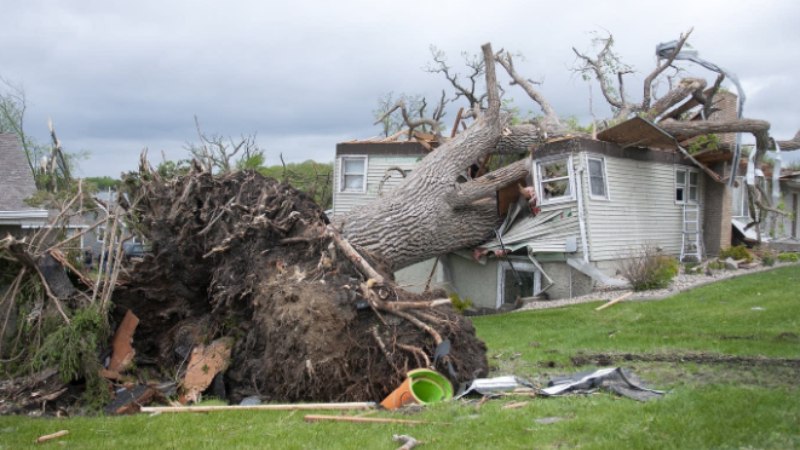
A fallen tree or large branch contacting the home should always be taken seriously.
The impact can damage shingles, sheathing, rafters, trusses, gutters, siding, and other structural components.
Even when the roof looks intact from inside the house, hidden structural damage may exist beneath the roofing materials.
If a tree has fallen onto the home, occupants should avoid entering areas directly beneath the impact point until the structure has been evaluated.
Electrical lines also create an additional risk. If a tree or limb is touching electrical service equipment or utility lines, the appropriate utility provider or emergency service should be contacted before anyone approaches the area.
Once the location is safe, an emergency storm damage contractor can evaluate the building envelope and determine what stabilization and repairs are required.
Roof Punctures and Structural Openings
Flying debris can puncture a roof during severe weather.
Tree branches, construction materials, outdoor furniture, and other objects can become airborne during high winds and create openings in roofing systems or siding.
A punctured roof should generally receive immediate attention because the opening allows rainwater to enter directly into the structure.
Temporary weatherproofing may be necessary until permanent roofing materials can be installed.
Homeowners should never attempt to climb onto a storm-damaged roof themselves. Roofing surfaces can be wet, unstable, or structurally compromised following severe weather.
Damaged Flashing Around Chimneys and Roof Penetrations
Flashing protects some of the most vulnerable areas of a roofing system.
It is commonly installed around:
- Chimneys
- Skylights
- Plumbing vents
- Roof valleys
- Wall intersections
- Other roof penetrations
Strong winds can loosen flashing, while hail and flying debris can damage it.
Because flashing controls water around joints and transitions, even a relatively small failure can lead to significant water intrusion.
If water begins appearing near a chimney, ceiling penetration, or wall after a storm, damaged flashing may be one possible source.
A contractor can inspect these areas and determine whether immediate sealing or repair is required.
Storm-Damaged Siding
Storm damage is not limited to roofing.
Strong winds and hail can crack, loosen, puncture, or completely remove siding panels. When siding is missing, the weather-resistant materials beneath the exterior cladding may become exposed.
Minor cosmetic damage can usually be inspected through a standard appointment.
Emergency attention becomes more important when large areas of siding have been removed or when water is entering the wall system.
Damaged siding should also be inspected in combination with the roof, gutters, trim, and windows because storms often affect multiple exterior systems at the same time.
Gutter and Drainage Damage
Gutters may not seem like an emergency issue, but serious gutter damage can create major drainage problems around a home.
Heavy wind, falling branches, or hail can pull gutters away from the fascia or crush sections of the system.
When gutters fail, large amounts of rainwater may be directed toward:
- Foundations
- Exterior walls
- Entryways
- Landscaping
- Basement areas
A loose gutter hanging from the roofline can also become a safety hazard.
If damaged gutters are pulling away from the structure or directing water toward vulnerable areas, homeowners should contact a contractor for an inspection and temporary stabilization when necessary.
Damage Around Windows and Exterior Openings
Severe storms can break glass, damage window frames, loosen trim, and create openings around doors or other exterior penetrations.
Broken windows can allow water and wind directly into the home while also creating a security concern.
Temporary boarding or weatherproofing may be necessary until the damaged component can be permanently repaired or replaced.
When storm damage affects multiple parts of the exterior, working with a construction contractor capable of evaluating roofing, siding, gutters, and other components can simplify the restoration process.
Signs of Structural Damage After a Storm
Some storm damage goes beyond the exterior materials.
Homeowners should take possible structural movement seriously.
Warning signs may include:
- Sagging roof sections
- Newly cracked ceilings or walls
- Doors that suddenly do not close properly
- Visible movement in rafters or framing
- Portions of the roofline that appear uneven
- Major impact damage from a fallen tree
These conditions should not be treated as normal roofing repairs.
Homeowners should avoid damaged areas and contact qualified professionals to determine whether the structure is safe.
When Can Storm Damage Wait for a Standard Inspection?
Not every storm-related issue requires an emergency response.
If the house remains dry, structurally stable, and protected from additional weather, a scheduled inspection may be appropriate.
Examples can include minor gutter dents, limited shingle granule loss, small cosmetic siding damage, or concerns discovered after a hailstorm without active leaking.
That does not mean the damage should be ignored.
Storm damage can weaken exterior materials without creating immediate symptoms. A professional inspection can identify problems before repeated rain, wind, snow, and seasonal temperature changes make them worse.
What Should Hamilton Homeowners Do Immediately After a Storm?
Safety should come first.
Homeowners should stay away from fallen electrical lines, damaged trees, unstable roofing materials, and areas where structural movement is visible.
When conditions are safe, documenting the property can also be helpful.
Take photographs of visible exterior damage, interior water intrusion, fallen debris, and damaged property before cleanup begins whenever possible.
Avoid climbing onto the roof.
Storm damage can make roofing surfaces unstable, and professional contractors have the equipment and training needed to evaluate the system more safely.
If water is actively entering the home or the exterior has been opened to the weather, contact an emergency storm damage contractor promptly.
Why Fast Storm Damage Repairs Matter in Hamilton, Ohio
Hamilton and the greater Cincinnati region regularly experience weather conditions that place stress on residential exteriors throughout the year.
Wind, thunderstorms, hail, heavy rainfall, freezing temperatures, and seasonal temperature swings can turn a small roofing vulnerability into a much larger problem.
Quick stabilization helps limit how much additional moisture reaches the interior of the home.
It can also make it easier to distinguish the original storm damage from secondary damage that occurs because the property remained exposed afterward.
A thorough contractor should inspect the entire affected area rather than simply repairing the first visible symptom.
What Should an Emergency Storm Damage Contractor Inspect?
A professional storm inspection should look beyond one missing shingle or one visible leak.
Depending on the storm, the contractor may evaluate the:
- Roofing materials
- Roof deck
- Flashing
- Ridge and hip areas
- Chimneys and vents
- Gutters and downspouts
- Fascia and soffits
- Siding
- Windows
- Exterior trim
- Interior areas showing water intrusion
The contractor should then explain what requires immediate stabilization, what requires permanent repair, and what can be monitored.
Clear documentation is also valuable when homeowners need records of the property’s condition after a major weather event.
Frequently Asked Questions About Emergency Storm Damage in Hamilton
Should I call a roofer immediately if shingles are missing?
If a large number of shingles are missing, underlayment or roof decking is exposed, or water is entering the home, contact a storm damage contractor as soon as possible. A few damaged shingles without leakage may still require an inspection but may not constitute an immediate emergency.
Is a roof leak after a storm considered an emergency?
Yes. Active water intrusion should be addressed quickly because water can damage insulation, drywall, framing, electrical systems, and other parts of the home.
Should I inspect my roof myself after a storm?
Homeowners should visually inspect the property from the ground when conditions are safe. Climbing onto a storm-damaged roof is not recommended because the surface may be slippery, loose, or structurally compromised.
Does hail damage always require roof replacement?
No. The appropriate repair depends on the severity, location, and extent of the damage. A professional inspection can determine whether isolated repairs or broader roofing work is appropriate.
What should I do if a tree falls on my roof?
Stay away from the impacted area and watch for electrical hazards. If power lines are involved, contact the utility provider or emergency services first. Once the site is safe, contact a qualified storm damage contractor to evaluate the roof and structure.
Can storm damage affect siding and gutters too?
Yes. Wind, hail, falling debris, and heavy rain can damage roofing, siding, gutters, flashing, windows, fascia, soffits, and other exterior components during the same storm.
Protecting Your Home After Severe Weather
The most important question after a storm is whether the home is still protected.
If water is entering the house, roofing materials have been removed, a tree has struck the structure, or there are visible structural concerns, homeowners should contact an emergency storm damage contractor in Hamilton, Ohio promptly.
Damage that appears minor should still be professionally evaluated when severe weather has affected the property.
A timely inspection allows homeowners to understand what happened, stabilize vulnerable areas, and make informed decisions about permanent repairs before the next storm arrives.
For homeowners who are unsure about the severity of the damage, scheduling a professional storm inspection can provide clear guidance and help protect the home from additional problems.
Internal Linking Opportunities
For a roofing or construction website serving Hamilton, natural internal links could point to:
- Hamilton roofing company page
- Roof repair services
- Roof replacement services
- Storm restoration services
- Roofing inspection page
- Gutter installation or repair
- Siding services
- Cincinnati roofing services
- Insurance claim assistance information
Useful anchor text variations include storm damage inspection, roof repair in Hamilton, residential roofing services, storm restoration contractor, and professional roofing inspection.
Suggested Schema Types
- Article
- FAQPage
- LocalBusiness
- RoofingContractor
- Service